Choosing curtain fabric: sheer, linen, blackout, jacquard and velvet.
The right fabric balances light, privacy, drape and upkeep. Here is how each family behaves, and where we use it.
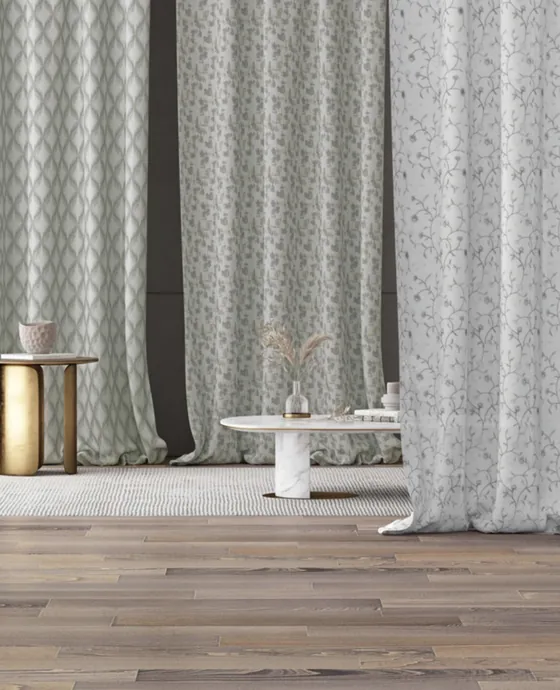
Sheer curtains
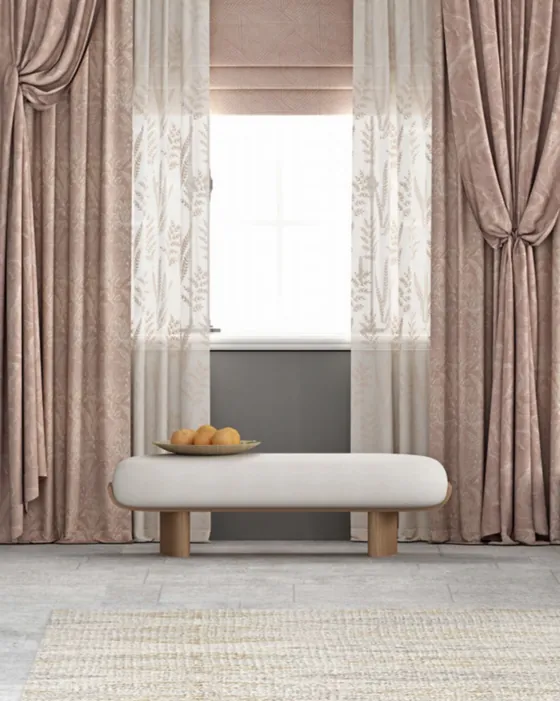
Sheers diffuse daylight and give privacy without closing the room. Embroidered and printed sheers add pattern while staying light. They are the first layer of most of our curtain sets.
Choose a sheer with enough fullness, about two and a half times the width, so it falls in soft folds rather than hanging flat.
- Light
- Diffuses daylight
- Feel
- Light and airy
- Care
- Gentle machine wash, many types
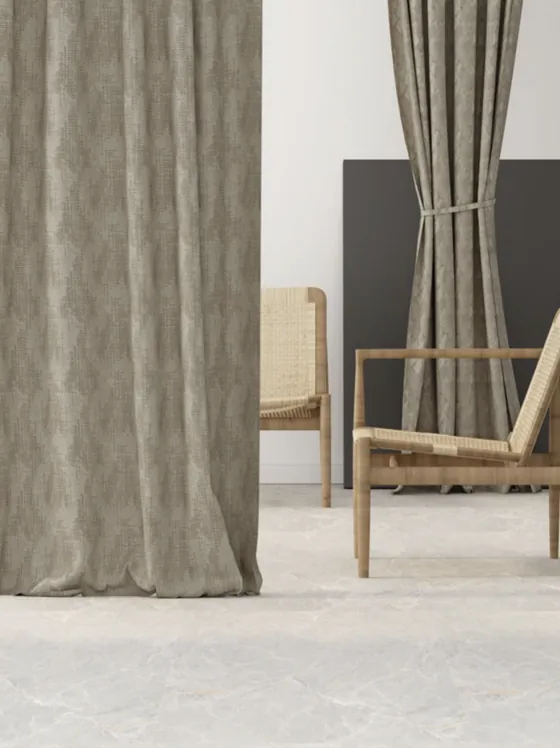
Linen and linen blends
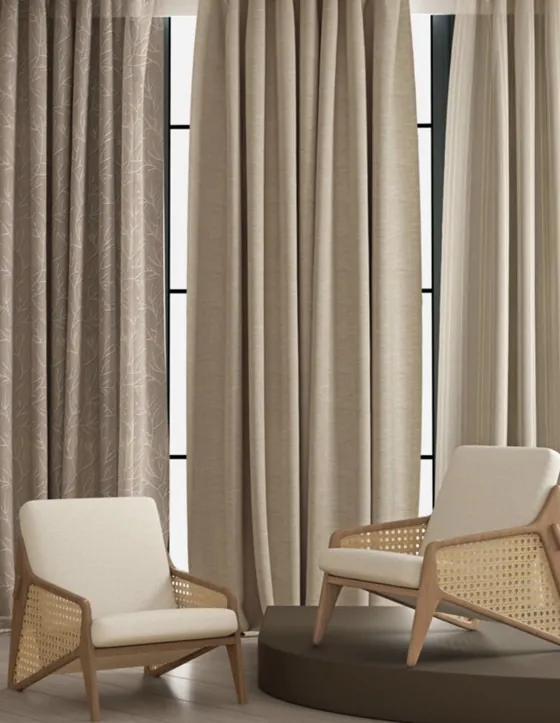
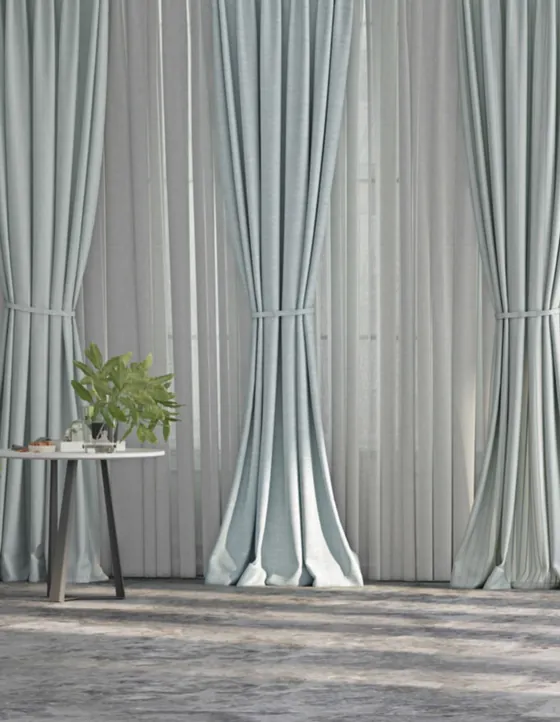
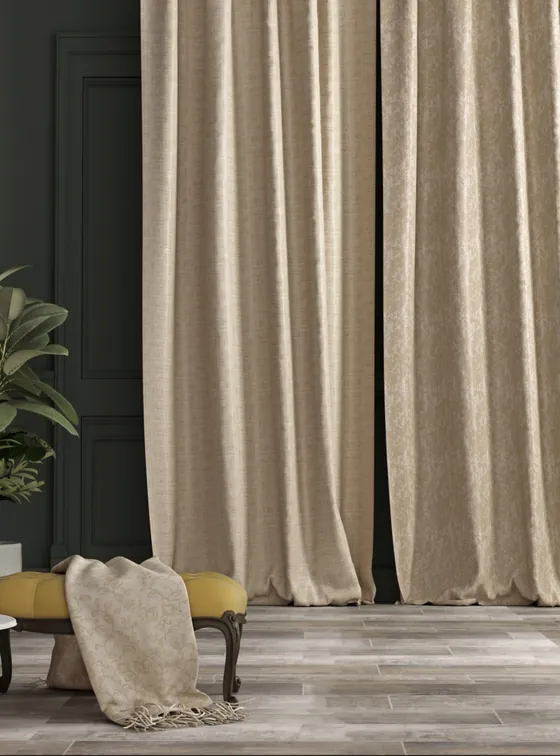
Linen brings natural texture and a relaxed drape. It looks at home in modern and Scandinavian-leaning rooms. Linen blends give the same look with better crease resistance and easier care.
For a fuller block of light, line the curtain or pair it with a blackout layer.
- Light
- Filters light, lined to block
- Feel
- Textured, natural
- Care
- Dry-clean or gentle wash, per fabric
Jacquard
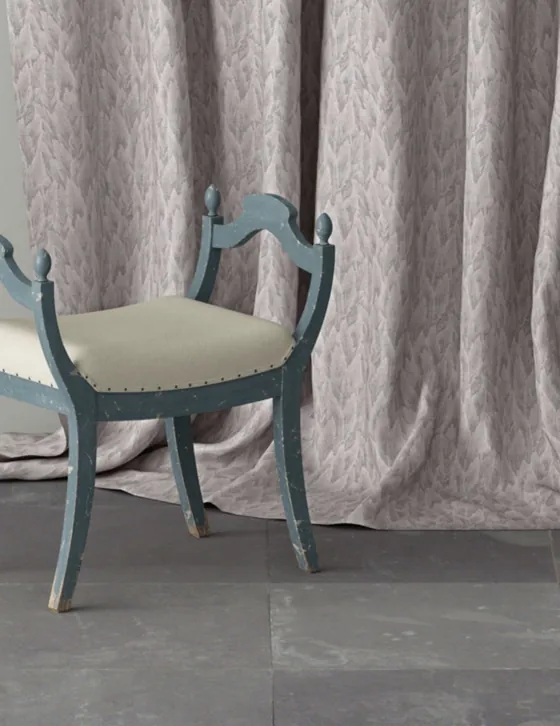
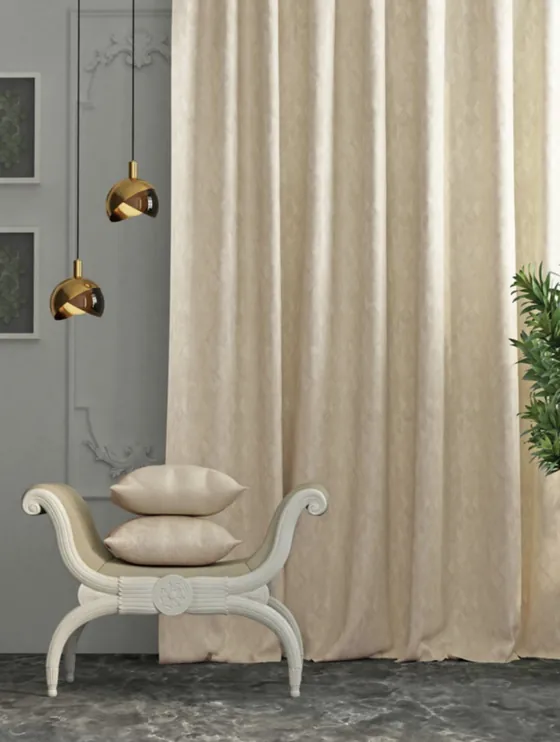
Jacquard fabrics have the pattern woven into the cloth rather than printed on, which gives depth, body and a formal fall. They hang with weight and look rich under cove and wall lights.
Tone-on-tone jacquards stay quiet and elegant. Deeper shades such as charcoal work well in media rooms and bedrooms.
- Light
- Medium to heavy, lined to block
- Feel
- Rich, structured
- Care
- Usually dry-clean
Blackout and lined curtains
A blackout fabric, or a proper lining behind a decorative fabric, blocks light and helps with heat. Lining also improves the hang of a curtain and shields the face fabric from sun.
For bedrooms and media rooms, we usually recommend a blackout layer behind or instead of the decorative fabric, paired with a sheer on a second track.
- Light
- Blocks most to nearly all
- Feel
- Weighty, smooth fall
- Care
- Dry-clean, per lining
Velvet
Velvet gives colour depth and a luxurious, heavy fall. It blocks light well and adds acoustic softness to a room. Because it is heavy, it needs a strong track and a fuller pleat.
Velvet can fade and mark in strong sun, so we recommend lining and a sheer at the window for south and west-facing rooms.
- Light
- Heavy, blocks most light
- Feel
- Plush, formal
- Care
- Dry-clean
Layer for day and night.
Most rooms work best with two layers on two tracks.
A sheer in front handles daylight and privacy. A heavier layer, such as linen, jacquard or blackout, handles evening and sleep. You can then open and close each layer independently through the day.
This also protects your main fabric: the sheer takes the first hit of direct sun, and the lining behind a decorative curtain takes the second.
Fabric questions.
Which curtain fabric is best for blocking light?
Blackout fabrics and lined curtains block the most light. A heavy jacquard or velvet with a proper lining also does well. Pale, thin fabrics let light through however many layers you stack.
Do linen curtains wrinkle?
Linen and linen blends crease more than polyester blends, which is part of their relaxed character. Blends hold their shape better. Lining and a good hem weight help a linen curtain hang cleanly.
Are sheer curtains worth it?
Yes. A sheer gives privacy and soft, diffused light by day, so you can keep the main curtain open. It also protects the main curtain from direct sun at the window.
How do I clean curtains?
Washable sheers and many blends can be machine-washed gently. Heavy jacquards, velvets and lined curtains are usually dry-cleaned. We note the care instructions for every fabric you choose.
Will dark curtains fade?
Strong sun fades most dyed fabrics over time, dark colours and natural fibres especially. A lining protects the face fabric, and sheers at the window reduce direct exposure.
See full-length fabric in your own light.
Swatches mislead. We bring larger samples to your home so you can judge colour and texture next to your walls and floors.